SHOP
3 min read

Why I joined ASTM's F50 Committee on AI in Manufacturing

By David Tucker on Jun 29, 2026 3:20:15 PM

I recently joined ASTM International's F50 committee, the group writing the standards and
methodologies for putting AI to work in manufacturing. I'll be upfront about where I'm
coming from. I didn't arrive at this as an AI researcher. I came to it from the additive side,
where I've spent years watching a technology go from interesting demo to qualified
production part. That climb is the reason I wanted a seat at this table, because I think AI in
manufacturing is about to make the same climb, and for the same reason.

ASTM logo-newsletter

The technology is moving fast. That part isn't in question. The harder problem, and the one
that hasn't really changed, is turning AI from something with potential into something that
actually changes how a shop runs.

The clearest way I've heard that problem framed comes from Dr. Jay Lee of the University
of Maryland, who chairs F50. In a recent paper, he and his colleagues lay out what they
call the ABCDE of engineering AI, the five ingredients every system depends on:

  • A Algorithms: the models and methods that power an AI system.

  • B Big Data: the information coming off machines, processes, and operations.

  • C Computing: the chips and infrastructure to process and scale it.

  • D Domain Knowledge: a real understanding of how the process and the parts behave.

  • E Ecosystem: the people, partners, integrations, and standards that make it work in practice.

Here's the part that matters. The first three, the algorithms, the data, and the compute, are
increasingly available to everyone. You can rent the compute, download the models, and
collect the data. They are becoming commodities. What you can't download is domain
knowledge and a working ecosystem. Those are the real differentiators, and they happen
to be the two things a manufacturer with real operational experience already has. The
shops that get results from AI are the ones who ground it in how their process actually
works, not the ones chasing the flashiest model.

That is also where standards come in, and it is why I think they matter more than the tools
do. The moment you try to deploy AI on a real line, the same questions surface every time:
whether the system actually works, whether the data feeding it is good enough to trust,
what success looks like and how you measure it, and how any of it connects to the
systems you already run. None of those are questions a single vendor's product can
answer. They are industry questions, and the only way to answer them consistently is with
shared standards. Standards are what reduce the risk, let different systems work together,
and build enough trust in the results that people will actually put them into production.
Without them, every AI project stays a one-off, and one-offs don't scale.

This is familiar ground for me, because it is exactly what happened with additive. The thing
that moved 3D printing off the prototype bench and into real production wasn't a better
printer. It was the standards work that let an aerospace or medical buyer trust a printed
part. ASTM's additive committee, F42, governs how a part is physically made and qualified.
F50 governs the data and AI layer that runs on top of it. Same factory, two floors. If you
already work on the first floor, the second one is the next step up.

So I see this as a natural progression for any manufacturer already investing in digital
processes, additive, 3D scanning, and connected workflows. The value of AI is tied directly
to the quality and availability of your data, and shops that have already gone digital have
that foundation in place. They are often the best positioned to use AI, because the hard
part, getting good data off the floor, is already underway.

AI is going to keep advancing whether any of us are ready or not. But whether a
manufacturer gets real value from it or just ends up with a graveyard of stalled pilots will
come down to more than tools. It will come down to practical frameworks, shared
standards, and a willingness to work across the industry instead of in isolation. That is the
work F50 is doing, and it is why I joined.

At M5D, we are putting real effort into shaping how AI gets applied on the factory floor, and
into helping our customers figure out where it delivers and where it doesn't. If any of this is
on your radar, the F50 committee is open, and it could use more people who know what
the floor actually looks like. Take a look, and consider getting involved.

Learn more and sign up for the ASTM: ASTM International Forms Artificial Intelligence Committee for Manufacturing | ASTM 
Topics: 3D Printing Additive Manufacturing AI in Manufacturing
1 min read

M5D Expands HP 3D Leadership with TPM Business Acquisition

By Kevin Carr on Jun 25, 2026 2:45:37 PM

 M5D (formerly MasterGraphics) has expanded its position as a leading HP 3D printing partner in the United States through the acquisition of TPM’s HP 3D printing and Advanced Manufacturing Technologies (AMT) business.  

This strategic move brings together complementary teams, customers, and capabilities—further strengthening M5D’s ability to deliver best-in-class support, expertise, and innovation across the HP 3D ecosystem.

As part of the transition, TPM’s HP 3D division and AMT equipment portfolio are now fully integrated into M5D. Customers can expect a seamless experience, with all existing contracts, service agreements, and support continuing without disruption.

The addition of TPM’s customers and team expands M5D’s service infrastructure and deepens its technical bench providing organizations with greater access to specialized expertise, faster support, and a partner fully focused on maximizing the value of HP 3D technologies.

Importantly, familiar relationships remain intact. Key team members have transitioned to M5D, ensuring continuity and preserving the trusted connections customers rely on every day.

“This is an exciting step forward,” said Kevin Carr, M5D CEO. “Our business has been built around HP 3D, and bringing TPM’s customers and team into M5D allows us to deliver an even higher level of service, capability, and long-term value.”

With this expansion, M5D is uniquely positioned to help customers accelerate adoption, optimize workflows, and unlock new opportunities with HP 3D printing technologies - backed by one of the most experienced and specialized teams in the country.

Topics: 3D Printing Additive Manufacturing 3D Scanning Solutions
1 min read

Replacing the Irreplaceable: How Digital Manufacturing Solved a Critical Supply Chain Issue

By Kevin Carr on May 14, 2026 2:13:19 PM

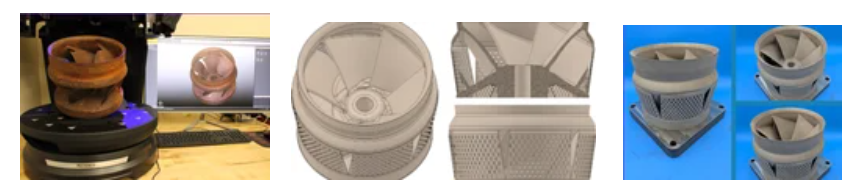
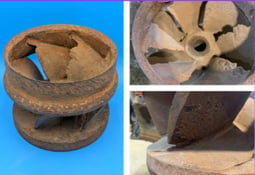
Every operation eventually faces it: a crucial part breaks, and the original manufacturer is long gone. No spares, no drawings, just an impossible problem and mounting downtime. When a gold mining operation in Alaska hit this wall with a corroded pump impeller vital for moving thousands of tons of sediment daily - they were out of options.

Kaiser-original part

This wasn't just a breakdown; it was a crisis threatening to halt their entire production. The impeller was severely damaged, unmanufacturable by traditional means, and without any digital blueprint. Sound familiar?

In our latest case study, "Replacing the Irreplaceable: How M5D and Kaiser Aluminum Imperial Built a Digital Path to On-Demand Manufacturing," we dive deep into how M5D's expertise in 3D scanning, advanced reverse engineering, and digital modeling, combined with Kaiser Aluminum Imperial's cutting-edge metal additive manufacturing, transformed an impossible situation into a repeatable, on-demand solution.

Discover how M5D and Kaiser Aluminum Imperial:

  • Took a severely degraded physical part and digitally reconstructed it with engineering precision.
  • Leveraged application-specific materials and additive manufacturing to produce a highly durable replacement in just days.
  • Provided a long-term strategy for obsolescence, giving the customer a digital asset for future needs.

Kaiser-blog image
This project isn't just about replacing a part; it's about changing how industries overcome supply chain challenges and maintain legacy equipment. If you're struggling with obsolete parts, long lead times, or complex component replacement, this case study shows what's possible with the right digital approach.

Ready to see how "irreplaceable" parts become controllable?

Topics: 3D Printing Additive Manufacturing 3D Scanning Solutions
5 min read

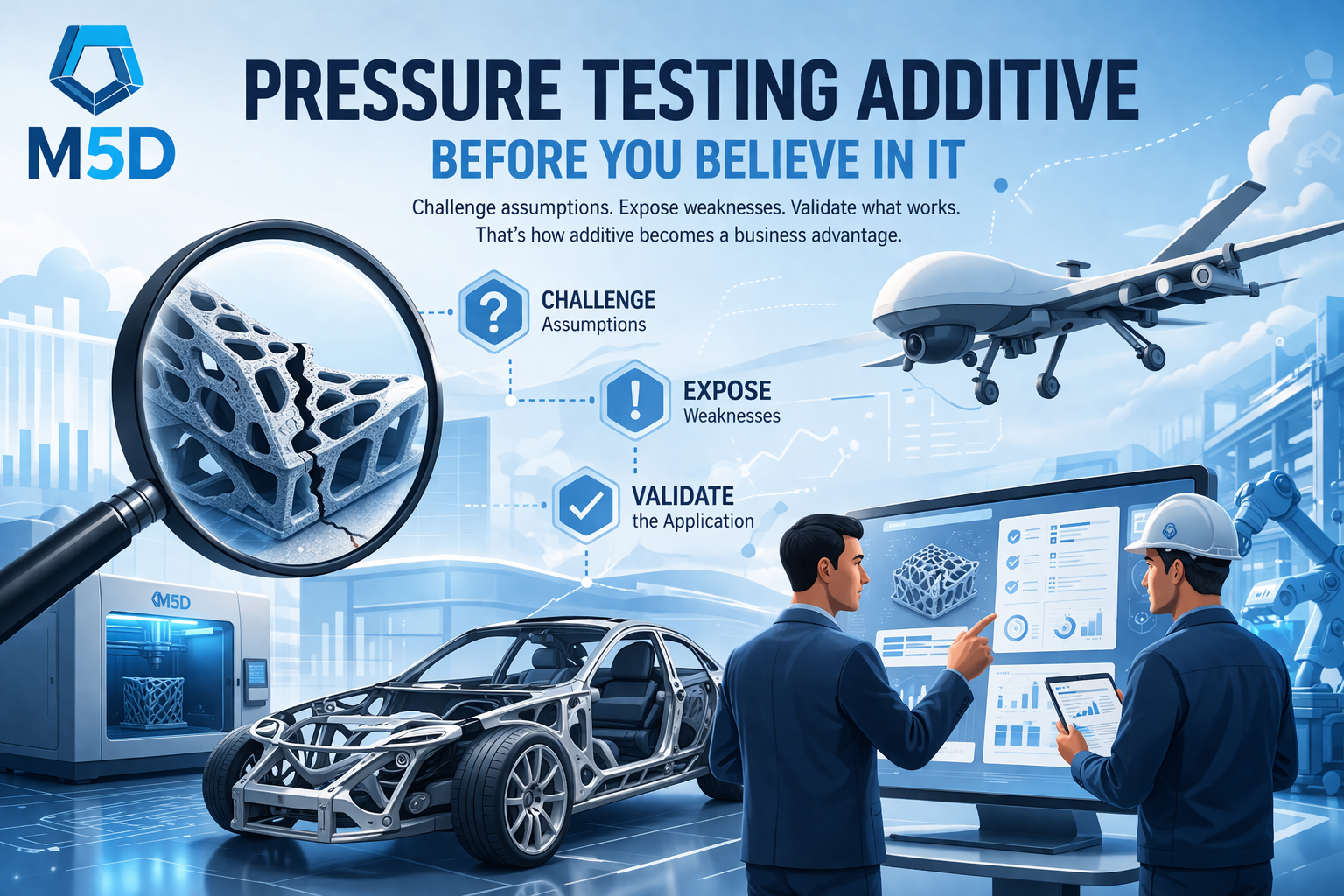
Pressure Testing Additive Before You Believe in It

By Zach Carr on Apr 21, 2026 2:00:10 PM

Some time has passed, but my first AMUG definitely lived up to the hype.

It was great catching up with familiar faces and meeting new ones, but the real value was the learning. One of my biggest takeaways came from the keynote by Steve Fournier of General Atomics Aeronautical Systems, Inc. and Scott Sawyer of Divergent Technologies.

Not because of the technology itself - but because of how they approached adoption.

Pressure testing additive for innovation

When Additive Becomes a Pitch

  • Most additive manufacturing conversations start the same way:
  • Features
  • Benefits
  • Design freedom
  • Part consolidation
  • Speed

Every company and every machine have something that stands out. Don’t get me wrong, that’s valuable. But these are also the easiest things to talk about. They’re not the conversations that change a business.

A Different Starting Point

What stood out here was simple: They didn’t start there. Instead, they started by challenging the idea itself. Divergent had already proven their additive-driven, software-defined manufacturing model in automotive. Their platform integrates:

  • Design software
  • Additive production
  • Automated assembly

All within a fully digital manufacturing system.

Expanding Into Aerospace - Without Assumptions

The next step was expanding into aerospace and defense through their partnership with GA-ASI, specifically around unmanned aircraft systems.

On paper, it made perfect sense:

  • Lightweight structures
  • Complex geometries
  • Performance-driven design

All strong fits for additive.
But they didn’t assume it would translate.

They Pressure Tested It

Instead of building a case for why additive should work…They focused on where it might break.

They asked:

  • What carries over from automotive?
  • What doesn’t translate?
  • What still needs development?
  • Where does the process fall short under new demands?

Because aerospace brings:

  • Different requirements
  • Different risk tolerance
  • Different qualification standards
  • Different expectations for performance and reliability

The Mindset Shift

  • From selling the technology → to validating the application
  • From proving upside → to exposing risk
  • From excitement → to discipline

This is where additive stops being interesting…and starts becoming business-critical.

Where Projects Actually Succeed (or Fail)

This approach forces a deeper level of thinking:

  • Beyond the machine → into the workflow
  • Beyond a single part → into repeatability
  • Beyond a pilot → into production

It does three things:

  1. Challenges assumptions early
  2. Aligns teams faster
  3. Prevents investment in solutions that won’t scale

Because this is where most additive initiatives either gain traction or quietly stall out.

The Questions That Actually Matter

It’s easy to find parts that look like a good fit:

  • Consolidated designs
  • Reduced assembly
  • Lightweighting

But that’s just the starting point.
The real questions come after:

  • Can the material meet long-term requirements?
  • Can the process support production volumes?
  • Does post-processing become a bottleneck?
  • Will teams actually adopt and design for it properly?
  • Can the business support it beyond a pilot phase?

If those answers are unclear…The project is already at risk.

Pressure Testing Isn’t Negative, It’s Necessary

This level of scrutiny isn’t pessimistic. It’s strategic.

  • If the idea fails early, you save time, money, and resources
  • If it survives, you move forward with something that can scale

How We Approach It at M5D

At M5D, this is how we approach additive:

  • ·Not just where it fits
  • But where it holds up under real conditions
  • Not just what it can do
  • But what it can’t

Because the goal isn’t to force additive into the process.

The Real Goal

The goal is to find where it actually works and build from there.

That’s what drives real adoption.
Not hype. Not features.

 But applications that survive the test. 

Evaluate Where Additive Actually Works

If you're exploring additive manufacturing, the biggest risk isn’t choosing the wrong machine—
it’s moving forward without validating the application.

At M5D, we help teams pressure test additive before they invest.
Schedule an Additive Assessment here, Zach Carr

Zach Carr
zcarr@m5d.com
(312) 982.426

Topics: 3D Printing Additive Manufacturing AMUG
3 min read

HP's New IF 3D 600HT enables printing with New Materials

By Dave Macfie on Feb 12, 2026 9:35:53 AM

HP has just introduced the HP IF 3D 600HT, a high temperature industrial filament printer developed from the proven 3DGence Industry F421 platform—a system Cimquest has supported for years.

Many manufacturers tell us they’re struggling with applications that require more from their materials: greater heat resistance, improved chemical durability, or a lightweight alternative to metal. The 600HT addresses these challenges by enabling printing with ULTEM, PEEK, PAEK, and carbon fiber reinforced polymers—materials that aren’t achievable on powder bed systems like MJF or SLS.


Organizations working in aerospace, energy, medical, rail, and automotive also frequently ask for better consistency when working with high performance polymers. The system’s integrated Materials Management System (MMS) helps resolve these issues by drying, conditioning, and even annealing materials like PEEK to improve strength and ensure repeatable output.

Because this platform is built on an architecture our team already knows well, M5D customers can move into high performance filament printing without the uncertainty that typically comes with adopting a new technology. The 600HT simply extends HP’s ecosystem into applications where customers have been asking for more capability and more material flexibility.

A few questions to consider:

  • Are heat, chemicals, or load causing failures with your current printed parts?
  • Would access to ULTEM, PEEK, or carbon fiber–reinforced polymers change what you can take on?
  • Is variability in filament printing limiting your ability to produce repeatable, production‑grade parts?
  • How important is an open, industrial workflow for your next round of applications?

If any of these sound familiar, connect with us and we can compare notes and see whether the 600HT fits your workflow.

Dave Macfie
3D Printer Sales
Direct: 908-655-5484
Email: dmacfie@m5d.com

Topics: 3D Printing Additive Manufacturing HP
3 min read

Powering Additive Innovation Together: Why M5D Decided to Partner with Formlabs

By Zach Carr on May 9, 2025 2:18:00 PM

At M5D, we know 3D printing is about delivering results that are strong, fast, consistent, and cost-effective.  That's why we've partnered with Formlabs, whose latest ecosystem—from materials to machines—is built to solve the most common bottlenecks in modern additive workflows.

Here's how: 


Material Library: Expand Your Possibilities

Current problems:

  • Parts fail to meet performance expectations due to limited material capabilities
  • You're forced to turn away projects you don't have the right materials
  • Outsourcing specialty parts adds cost, delays, and risks

Solution:
Formlabs offers one of the most diverse resin and powder portfolios on the market—from engineering-grade nylons to biocompatible, flexible, and heat-resistant resins.  Print prototypes, tools, and end-use parts all in-house, and take on more projects without hesitation.  Even supports Open Material Licensing on Form 4 and Form 4L.

The largest selection of resin and powder-based materials in the industry are at your fingertips.
The booklet for all their materials is down below.

Formlabs Material Library.pdf


Form 4 / 4L: Speed, Reliability, and Flexibility

Current problems:

  • Long print times delay innovation and delivery.
  • High outsourcing and material costs eat into your margins.
  • Inconsistent quality and part failures impact trust.
  • Limited build volumes restrict part size and throughput.

Solution:
The Form 4 and Form 4L combine blazing-fast print speeds, automated resin management, and precision optics to deliver high-quality parts in less time—with build volumes to match your ambition.  Reliable, scalable, and ready to grow with you.

Check out the following pdfs on our 3D resource page:  Form 4L vs Form 3L & Form 4


Fuse 1+ 30W: Industrial-Grade SLS, Reimagined

Current problems:

  • Weak or fragile prototypes that don't survive real-world use.
  • Inconsistent results make it hard to scale or standardize.
  • Production grade applications cannot be pursued because of expensive equipment.
  • Wasted powder and limited in-house capabilities force outsourcing.

Solution:
The Fuse 1+ brings production-ready SLS printing to your workspace—with powerful lasers, recyclable materials, and a compact footprint.  Durable parts, repeatable results, and an ecosystem (Fuse Sift & PostFuse) that's built for true in-house manufacturing.  The most ground-breaking part of the system is that the investment starts as low as $20,000.

Check out the following pdfs on our 3D resource page: Fuse 1 Ecosystem pdf


Automation: Less Hassle, More Output

Current Problems:

  • Time-consuming post-processing slows your team down.
  • Manual resin handling and material changes lead to delays.
  • Powder handling is messy and inefficient.
  • Tracking consumables and usage becomes guesswork.

Solution:
With automated resin dispensing, powder recovery, material detection, and workflow integration, Formlabs systems are designed to reduce manual steps and maximize output. You focus on creating—the machines handle the rest.

View the following pdfs on our 3D resource page: Fuse 1 Ecosystem, Form 4 & 4L Ecosystem, & Resin Wash  


Ready to Level Up?

If these problems sound familiar, you're not alone—and you're not stuck.  With this partnership with Formlabs, a comprehensive digital manufacturing solution and technology-focused adoption team is available to tackle these exact problems.

Read more about Formlabs partnership or talk to me, Zach Carr, about how to bring this technology in-house.

Zach Carr
zcarr@m5d.com
(312) 982.4268

Topics: 3D Printing 3D Materials Formlabs
4 min read

Can you really trust a $200,000 DMLS Metal 3D printer?

By Kevin Carr on May 8, 2025 10:45:19 AM

That question came from Shane Jetton during a conversation—and it stuck with me.  In an industry full of big promises and even bigger price tags, it's a fair question to ask.  At M5D (formerly MasterGraphics), we've been deeply involved in metal additive manufacturing for years.  And like many others in this space, we've made some expensive mistakes—investing in systems that didn't live up to the hype.  So when One Click Metal approached us about becoming a reseller,  our initial reaction was skepticism.  Affordable DMLS printing with industrial-grade output? It sounded like another lofty promise. But after doing the research—speaking with other resellers, end users, and evaluating their product line—we decided to move forward.

One Year In:  One of Our Best Decisions in Additive Manufacturing

Now, nearly a year later, we've installed over 10 One Click Metal systems across a range of customers—from small shops to enterprises.  And we're confident in saying this was one of the two best AM decisions we've made in the last decade (the other being HP in 2017).

Here's why:

1. Simplified & Safer Powder Handling

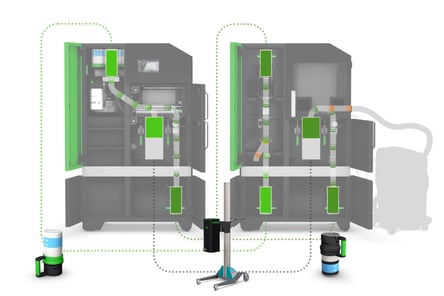
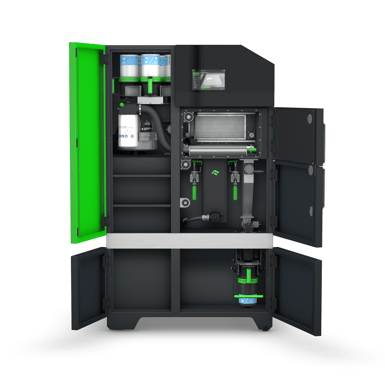
One Click's cartridge-based powder management system drastically reduces direct interaction with metal powders, improving both safety and cleanliness on the shop floor.  The integrated MPURE station automates depowdering and sieving, making unused powder easy to recycle and reuse—a crucial feature for cost control and sustainability.

Pulverkreislauf_Grafik_19202.  Industrial-Grade Hardware in an Accessible Package

Despite its compact size and lower price point, the MPRINT+ system is packed with serious performance:

  • 200W Fiber Laser
  • Galvo Scanner with scan speeds up to 3000 mm/s
  • Focus diameter of 45 microns
  • Build Volume of 150 x 150 x 150 mm

This makes the system ideal for both prototyping and low-volume production.

MPRINT_open_02-23. Cost-Effective and Scalable

Lead with price?! I always believe that any solution needs to start wit the "pain" first to see if there is even a solution.  The clear ground breaking part of the system is a total system price around $200,000, One Click offers a far more accessible entry point into metal AM compared to traditional DMLS systems, which often exceed $800k.

Want to break it down even further?  You're looking at about $5K/month, including equipment and maintenance.   That's a very manageable entry point—and a strong starting ROI for SMBs, service bureaus, or educational institutions.  

4. Modular Design for Future-Proofing

The BOLDSERIES platform includes:

  • MPRINT+ Printer
    • Ask me about the lab print module - an innovative way to run different materials!
  • MPURE Processing Station
  • MONE 3D Print Software

This modular ecosystem makes upgrades and servicing far more manageable, ensuring that customers can scale their system as their needs evolve.

ocm system5. Remote Monitoring & Control

Through the MONE software, users can remotely control and monitor print jobs from anywhere—ideal for busy teams or distributed production environments.

mone1

Real-World Performance: Side-by-Side with the Big Guys

We've installed One Click systems alongside legacy DMLS systems that cost nearly four times as much—and the results are comparable.  That's not just a selling point, that's proof.  While no system is perfect—and One Click continues to improve, especially in their OS—we're confident in the solutions.  So confident, in fact, that we've personally guaranteed success to our customers.  

big guys - ocm

Final Thoughts

If you've been skeptical of metal AM systems, you're not alone.  If you've been burned in the past, we've been there too.  But the One Click Metal system is the real deal:  safe, scalable, and affordable—without sacrificing performance.  So, can you trust a $200K DMLS system?

Yes—you can!

And we believe it's changing the landscape of metal 3D printing.

If you'd like to see it in action, learn more, or talk to other customers, we'd be happy to connect you with the right people—even if you're outside our region.

M5D One Click Metal webpage

Thanks for reading!

Kevin Carr
President | M5D
kcarr@m5d.com


Topics: 3D Printing Metal Metal 3D Printing 3D Materials
2 min read

M5D to Host AM Seminar at Annual SPE Thermoforming Conference

By David Tucker on May 7, 2025 3:48:39 PM

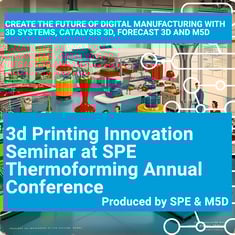
M5D will be hosting a seminar on Additive Manufacturing during the Annual SPE Thermoforming Conference.  This conference is dedicated to educating attendees on the development and application of thermoformed products, covering both thick and thin gauge materials.SPE Thermoforming

The Additive Manufacturing track will focus on how digital manufacturing technologies are being integrated into the thermoforming industry.  Attendees will learn how these innovations can accelerate time to market, reduce costs, expand manufacturing capabilities, and support creating more cohesive production systems.  

The seminar will feature the following presentations:

  1. Large-Format Printing with the Titan Pellet Extruder by 3D Systems
    This session will explore how large-format 3D printing is being used to produce thermoforming molds across various industries.  A featured case study will showcase a motorcycle fairing made from thick-gauge material, with intricate backside details created using 3D Systems' PSLA process.  The components were assembled using adhesive bonding, highlighting benefits such as faster lead times and cost savings.
  2. Polypropylene (PP) Printing and Assembly with Forecast 3D
    This presentation will demonstrate how Forecast 3D leverages PP-based additive manufacturing to create detailed components for assemblies.  These parts are designed to integrate with PP-based materials like TPO and enable traditional plastic welding methods.  The process supports efficient digital manufacturing while maintaining compatibility with existing thermoplastic joining techniques.
  3. Tooling with Binder Jet Sand Printing by Catalysis 3D
    Catalysis 3D will showcase how binder jetting with sand can produce high-performance thermoforming tools.  This approach results in durable molds with improved thermal characteristics and rapid development timelines, offering a cost-effective alternative to conventional tooling methods.

IMG_9031

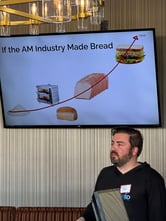
To conclude the seminar, I will present on Adding Value to Products Through Digital Manufacturing.  My talk will examine how emerging technologies evolve into essential enablers, focusing on the strategic benefits that digital manufacturing can bring to a product portfolio.


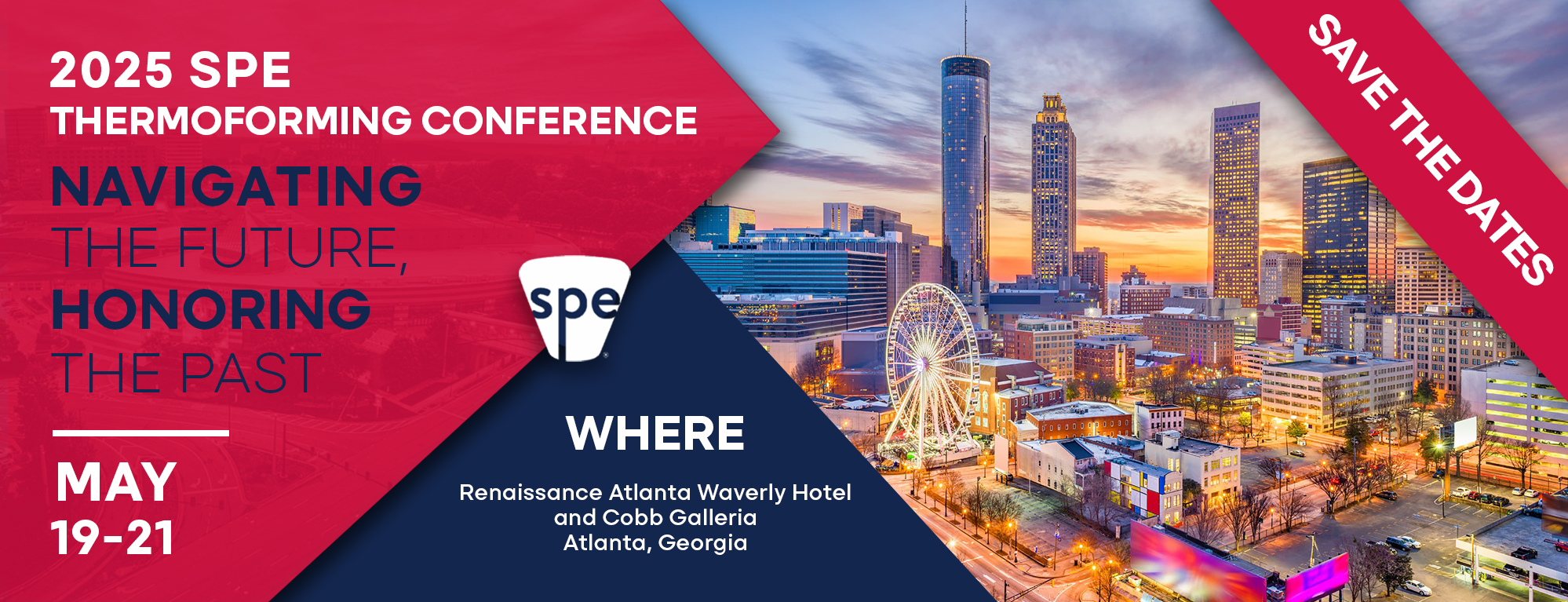
Click here to register for the 2025 SPE Thermoforming Conference in Atlanta, Georgia May 19-21, 2025 

SPE-2025-Theme_SAVEtheDate

Topics: 3D Printing Additive Manufacturing Thermoforming
1 min read

Do You Have a Blueprint for Additive Manufacturing Success?

By Kevin Carr on Nov 9, 2023 1:39:47 PM

Could you elevate your Approach with a Solid Plan from the Experts?

Challenge the status quo by asking yourself: Is your current additive manufacturing plan truly optimized, and how can you elevate it to new heights of success? 

Please prepare for enlightening insights as our experts share their valuable knowledge.

You'll hear from 4 expert panelists:

  • Carl Douglass, CEO, DI Labs
  • Brian Douglass, COO, DI Labs
  • David Rosendahl, President & Co-Founder, MindFire Inc
  • Kevin Carr, President, MasterGraphics

In this session, our panelists will analyze and exchange insights on:

  1. How embracing Additive Manufacturing can reshape your product development approach, fostering agility and sparking creative ingenuity.
  2. Why having a structured process for product development through Additive Manufacturing is not just advantageous, but essential.
  3. How aligning your additive manufacturing strategies with your business goals can drive growth, boost efficiency, and amplify your competitive edge.

Whether you're a business owner, product manager, or industry professional, this webinar offers valuable insights and practical strategies for anyone seeking to enhance their additive manufacturing prowess.

banner with webinar removed

Watch Video


Topics: 3D Printing Additive Manufacturing MJF Webinar