| |
1. |
Test form, fit and function – Prototyping is the traditional use for additive manufacturing. Chances are, the 3D printed part will not be the same material as your production part. It won’t have the exact same surface finish, weight, or durability. But what it does have are the same approximate dimensions, and overall spacial representation of your production part… no machining or tooling required! It’s much quicker and cheaper to 3D print your CAD file overnight to do a rough fit-up before cutting any metal. |
| |
2. |
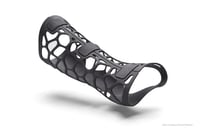 Help Understand size/scale – If you’ve ever designed in CAD software, all parts look to be about 6-12” long… depending on the size of your computer monitor. That is the beauty of 3D CAD design – whether you are designing a skyscraper or a microchip, you can view your part at a comfortable scale. But once that part gets sent to the shop floor or 3D printer, it may shock you to see how big or small it really is. When I worked as a design engineer, I was always surprised at how small my parts ended up being. By 3D printing them before even machining a metal prototype, I was able to notice details like potential difficulties in assembling such a small piece. Help Understand size/scale – If you’ve ever designed in CAD software, all parts look to be about 6-12” long… depending on the size of your computer monitor. That is the beauty of 3D CAD design – whether you are designing a skyscraper or a microchip, you can view your part at a comfortable scale. But once that part gets sent to the shop floor or 3D printer, it may shock you to see how big or small it really is. When I worked as a design engineer, I was always surprised at how small my parts ended up being. By 3D printing them before even machining a metal prototype, I was able to notice details like potential difficulties in assembling such a small piece.
|
| |
3. |
CNC fixture planning – Communication between the design engineers and machinists (or shop manager) is very important. One of the first steps to being a good designer is to understand the manufacturing process, and a big part of that is fixturing. Once the engineering drawing makes it to the shop floor, they need to figure out how to make the part. Sometimes designing and building fixtures can take weeks. Providing a 3D printed part to the machinists can help them plan their fixture technique and speed up the overall process.
|
| |
4. |
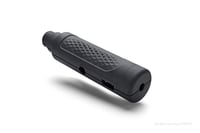 Feel ergonomics – Ergonomics (from the Greek word ergon meaning work, and nomoi meaning natural laws), is the science of refining the design of products to optimize them for human use. Feel ergonomics – Ergonomics (from the Greek word ergon meaning work, and nomoi meaning natural laws), is the science of refining the design of products to optimize them for human use.
Any component that a human needs to physically interact with requires some design consideration for how this interaction happens. Typically when we hear “ergonomics” we think of chairs or desks, but let’s not forget all handles, knobs, toys, remotes, furniture, tools, just about anything to do with an automobile… the list goes on. The best way to test the ergonomics of a design is to physically interact with it, and that is one thing a CAD visualization cannot provide. 3D printing provides a quick and effective way to hold a handle, for example, in your hands to see if it feels comfortable and usable. Pass the part around to multiple employees to get their feedback and suggestions.
|
| |
5. |
Shadow boxes – A shadow box provides a visual cue for where tools or components need to go. This is big for shops implementing lean manufacturing practices. In many cases, programming and machining a shadow box to the exact curves and angles of the tool/component placement is not worth the time or effort. 3D printing a shadow box from cheap plastic overnight with no operator supervision required makes more sense.
|
| |
6. |
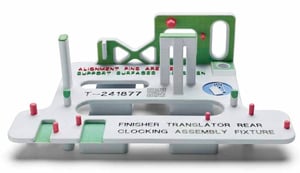
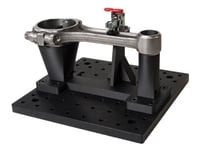 CMM Fixtures – One of our best customers, an injection mold company in Wisconsin, 3D prints all their CMM fixtures. The fixtures are designed to match the exact contours and angles of the part so they fit perfect every time. They also design the part numbers right into each fixture, so when they need to use one, they have the fixtures arranged by part number on shelves. If and when a fixture wears out, they simply use the same print file to create another overnight. Their machinists no longer have to spend time machining aluminum CMM fixtures. CMM Fixtures – One of our best customers, an injection mold company in Wisconsin, 3D prints all their CMM fixtures. The fixtures are designed to match the exact contours and angles of the part so they fit perfect every time. They also design the part numbers right into each fixture, so when they need to use one, they have the fixtures arranged by part number on shelves. If and when a fixture wears out, they simply use the same print file to create another overnight. Their machinists no longer have to spend time machining aluminum CMM fixtures.
|
| |
7. |
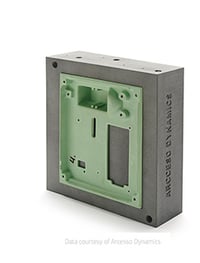 Short run tooling for injection molding – Injection mold tooling might be the holy grail of 3D print applications. Hard steel molds are expensive and take weeks or months to machine. If there are design changes, you can multiply that timeline many times over. While a handful of companies are attempting the move to directly 3D print production parts, the reality is injection molding is (for now…) superior in terms of material options, surface finish, accuracy and repeatability. We now see company’s directly 3D printing short-run molds in both plastic and metal in a fraction of the time. Even if there is clean-up machining or polishing required, it still drastically cuts down on the cost and time compared to traditional methods. Short run tooling for injection molding – Injection mold tooling might be the holy grail of 3D print applications. Hard steel molds are expensive and take weeks or months to machine. If there are design changes, you can multiply that timeline many times over. While a handful of companies are attempting the move to directly 3D print production parts, the reality is injection molding is (for now…) superior in terms of material options, surface finish, accuracy and repeatability. We now see company’s directly 3D printing short-run molds in both plastic and metal in a fraction of the time. Even if there is clean-up machining or polishing required, it still drastically cuts down on the cost and time compared to traditional methods.
|
| |
8. |
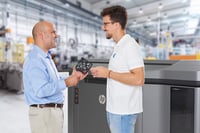 Demo pieces for the sales team – If a picture is worth 1,000 words then a physical model is worth 1 million. Giving the sales team a part to show off in meetings or pass around in a presentation, it makes their job of selling much easier. Presenting a physical prototype for a client to hold in their hands is better than almost any computer generated image. The sales team brings in the money for the company, which pays everyone’s salary… so give them the best tools possible! Demo pieces for the sales team – If a picture is worth 1,000 words then a physical model is worth 1 million. Giving the sales team a part to show off in meetings or pass around in a presentation, it makes their job of selling much easier. Presenting a physical prototype for a client to hold in their hands is better than almost any computer generated image. The sales team brings in the money for the company, which pays everyone’s salary… so give them the best tools possible!
|
| |
9. |
Low to mid-volume production parts – As mentioned previously, many companies are turning to additive manufacturing for their primary means of production. As printer technology improves and more materials become available, not only is the part quality good enough, but it makes financial sense. If the EAU is in the millions, injection molding is the way to go. But if we are in the 1,000s to 10,000s, depending on geometry, it can be a financially sound option. That’s not to mention design freedom (organic shapes, hollow parts, etc.), part customization, and on-the-fly design changes. |
| |
10. |
Validation before tooling investment – Imagine being a young engineer, designing your companies latest new product which happens to be a complex plastic part. You’ve finished the design and management is asking for the go-ahead to purchase the tooling for $60,000. You hope the design is perfect because if it needs a design change for whatever reason, they may have to remake the tooling which costs another $60k and 2 months. In 2019, 3D printing your plastic part before purchasing the tooling is a critical step in the design phase. Test as much as possible before investing in the tooling. Get every kink and potential failure point out of your design to ensure the maximum chances of success.
|
| |
11. |
Custom assembly tools – Whether it is a robot of human hands assembling parts, often times unique custom tools are required for the job. There could be a screw in a tight space, or an oddly shaped part that needs to be precisely placed. Similar to CMM fixtures, an assembly tool can be 3D printed to perfectly fit your part with its unique geometry. This is also another perfect example of something that is low volume (maybe only 1 or a handful are needed) and it’s not worth a machinist operators time to set up and machine an assembly tool using a mill or lathe. 3D printing is a great fit for custom one-off applications like assembly tools.
|
| |
12. |
Space claim planning – Planning a new shop or office takes careful planning to ensure the space is both safe and efficient. 3D printing the footprint of each machine, desk, room, etc. allows a physical layout of the proposed idea. Decision makers can stand around the scale mode, physically move the pieces around, and discuss their options. This can be a more effective way than using a computer generated model on a computer screen in which one person has control, or emailing revisions back and forth.
|
| |
13. |
Trade show giveaways – While most companies wouldn’t give away their product or service for free at a trade show, a miniature of useful trinket can be a practical marketing piece. At MasterGraphics, we 3D print hundreds of bottle openers with our name on it. It serves multiple purposes. It shows off the strength, surface finish, and level of detail of our HP Multi Jet Fusion parts. It shows the ‘MasterGraphics’ name, so our customers remember who they got it from. Finally, the bottle opener is actually a useful for the prospect! Personally I keep mine with me on my keychain at all times, as it acts as a great conversation starter as well.
|
| |
14. |
Fluid flow – One of the biggest benefits of additive technology is the design freedom to create complex geometry for free. By “free”, I mean that the 3D printer does not care what your design is, in the same way a paper printer doesn’t care how complex your words are. It just prints what it is told. Fluid flow (whether gas or liquid) is a very complex area of study, and one where “simple” is not always better. 3D printing can create fittings, ducts, and passageways with unique bends, curvature, and internal geometry that would otherwise be impossible to create. The benefits of this are to reduce fluid turbulence which causes noise, vibration, and system inefficiency. This is especially critical in the aerospace and automobile industry.
|
| |
15. |
Replacement machine components – Spare parts and replacement parts are a fast growing application for additive manufacturing. If a production machine goes down, you are losing money every minute and hour it sits idle. Sometimes waiting for a repair technician or replacement part is just not an option. By having a 3D printer on site, it can be ready to print any broken component immediately. One of our customers purchased a $500k+ metal 3D printer for that sole purpose. Their production machines were extremely old (80+ years) and the original tooling and drawings no longer existed. (or never did) The potential loss in revenue from a broken machine was not worth the risk so they invested in a high end 3D printer to quickly address any needs.
|
| |
16. |
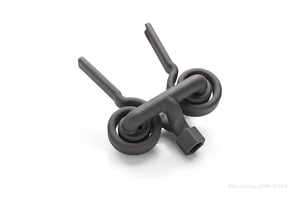
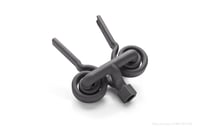 Robotic Grippers/End Effectors – Assembly lines are becoming more automated due to lower cost, higher quality robots. The “end effector” is the modular “hand” at the end of the robot. The strength-to-weight ratio of the end effectors is very important because heavy grippers are more energy intensive to move, especially at high speeds. 3D printing is the perfect solution for robotics. 3D printed parts can be hollowed or printed with a lattice structure for weight reduction. They can also be printed with precise geometry for your application. Markforged makes 3D printers with continuous carbon fiber, Kevlar, or fiberglass capabilities to achieve an incredible strength-to-weight ratio. Robotic Grippers/End Effectors – Assembly lines are becoming more automated due to lower cost, higher quality robots. The “end effector” is the modular “hand” at the end of the robot. The strength-to-weight ratio of the end effectors is very important because heavy grippers are more energy intensive to move, especially at high speeds. 3D printing is the perfect solution for robotics. 3D printed parts can be hollowed or printed with a lattice structure for weight reduction. They can also be printed with precise geometry for your application. Markforged makes 3D printers with continuous carbon fiber, Kevlar, or fiberglass capabilities to achieve an incredible strength-to-weight ratio.
|
| |
17. |
Print wear parts that have a lifecycle – Many parts have a planned lifecycle until they fail or are no longer effective. Additive manufacturing can provide on-demand replacement parts on an as-needed basis. No need to stock shelves full of minimum order quantities or keep shelves of “just in case” parts labeled and organized. Instead, build up a digital inventory of CAD files for your normal wear and tear parts, so a new part can be 3D printed the same day they are needed.
|
| |
18. |
Reduce inventory (print on demand) – Inventory can be a huge financial burden for manufacturers and OEMs. As mentioned in the previous section, 3D printing eliminates the need for minimum order quantities to sit on shelves for years. In many cases these stocks of inventory become obsolete, and end up as a financial write-off, with the parts headed for a landfill. “Industry 4.0” and “Digital Manufacturing” are becoming common terms. Replacing physical inventory with digital inventory is a main component of that.
|
| |
19. |
New and unique design constraints – All manufacturing methods have design constraints, 3D printing included. CNC machining is constrained by the drills, mills, cutters, fixtures, and machine capabilities (3-axis, 5-axis, etc). Injection molding is constrained by die draw, press size, and wall thickness. Stamping, extruding, and forming each have their own constraints. 3D printing is just another tool in the manufacturing toolkit. It eliminates a vast majority of traditional design constraints, but we’re left with constraints such as overhang supports, print orientation, powder removal, and stair stepping, to name a few. Additive manufacturing opens up the possibility of organic shapes, topological/generative design, and mass customization.
|
| |
20. |
Service bureau for customers – Along with the numerous benefits already mentioned for manufacturers, providing 3D printing as a service for customers is a quick way to pay for your 3D printer purchase. There are so many different types of 3D printers for various applications, and no company can own them all. Many times a manufacturer will have a unique machine or material that someone else could benefit from. Typically this stems from sales demo pieces (#8), trade show giveaways (#13), or functional prototype testing (#1, #10). Once customers see your additive manufacturing capabilities, they will want to benefit from it as well on an as-needed basis.
|
| |
21. |
Take write off – The end of the fiscal year means the tax man comes knocking. Excess profits can be invested into additive manufacturing capabilities to grow your business and cut down on corporate taxes. With all the reasons listed here, it should be clear that a 3D printer, whether it’s $500 or $500,000, can be a solid financial investment to grow your business.
|
| |
22. |
To say you have one! – This may not be the case anymore, but back in the early 2000s it was a big deal to tell your customers you owned a 3D printer. Some companies purchased one for their lobby to show how innovative and forward-thinking they were. In 2019, most manufacturers are using additive technology in some form, whether directly or indirectly. It is almost an expectation to have additive capabilities of some sort for quick prototyping, even if it’s a $300 hobbyist FDM machine from Amazon. It is so easily integrated with the near universal 3D CAD design programs used, there really is no reason not to be using additive in some form.
|
| |
|
Feel free to contact me at Mark.Blumreiter@MasterGraphics.com or 414-559-360

|

 I spend a lot of time calling on Machine shops and Manufacturers seeking to understand their thoughts on how 3D printing technology may be effecting their manufacturing workflows. I will introduce myself and explain why I am calling which often leads to responses such as “I don’t see how we could use a 3D printer”, “we do not need a 3D printer’’, or “3D printing does not fit our processes”. These are typical responses often based on past experiences with 3D printing when the technology was geared more towards prototyping versus final use parts. Since I know often our clients past experience with additive manufacturing has been poor, I ask if they use fixtures or grips to focus more on the application, not 3D print technology. Almost all of the time the answer is yes to one or the other. I then ask how they manufacture their fixtures or grips which leads to the traditional answers such as “we machine them in house “ or “we send out for them”.
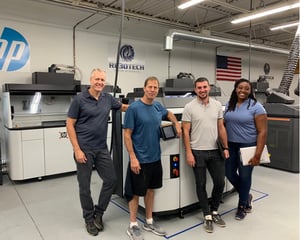 MasterGraphics installs one of the first HP Multi Jet Fusion 5210 3D Printing Production Solutions at Illinois based Service Provider RE3DTech.
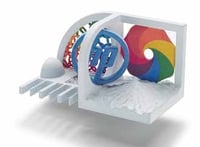 HP recently announced their new, sub-$100k, 500 series of 3D printers utilizing their innovative MJF (Multi Jet Fusion) 3D print technology. This is the same technology being used in HP’s revolutionary 4200 production-level 3D printers that were released in 2017. I should also note that HP MJF uses HP PageWide print head technology, which is also used in their 2D line of printers.
 When HP introduced their Jet Fusion color 3D printers, some may have had initial thoughts of “ho hum, Z Corp already did this years ago.” Right?