


Electric racing is pushing engineering boundaries in ways that traditional motorsports never had to consider.
Battery performance, thermal management, weight reduction, and rapid iteration all have to come together simultaneously. For many engineering teams, the real challenge isn’t just designing the solution — it’s testing and refining it quickly enough to stay competitive.
That’s exactly the challenge the InMotion student team at Eindhoven University of Technology set out to solve.
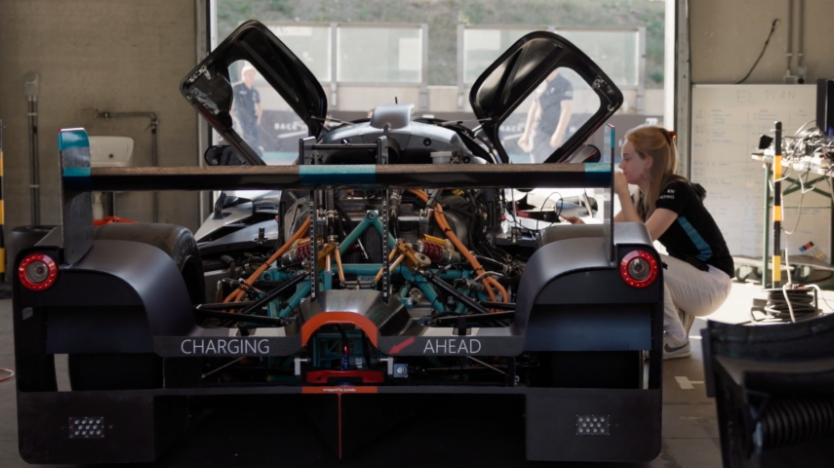
Their prototype race car, Revolution, is an LMP3 platform designed to demonstrate a breakthrough concept: charging an electric race car nearly as fast as a gasoline car refuels.
With their latest battery technology, the team can charge the vehicle to approximately 80% in around four minutes, bringing electric endurance racing closer to reality.
But reaching that level of performance requires more than advanced battery chemistry.
It requires engineering speed.
Where Traditional Manufacturing Slows Innovation
When engineers are developing high-performance systems like battery packs, cooling solutions, and electrical connectors, designs rarely work perfectly on the first iteration.
Waiting weeks for outsourced parts can slow development dramatically.
For racing teams, that delay can mean the difference between progress and missed deadlines.
That’s why the InMotion team integrated UltiMaker 3D printing directly into their engineering workflow.
From CAD to Functional Parts in Hours
Instead of waiting for traditional manufacturing processes, engineers can move directly from CAD models to physical components.
This enables the team to test designs immediately and refine them rapidly.
Their workflow typically looks like this:
1. Rapid Prototype Validation
Engineers print early iterations using PLA to quickly validate fit, form, and mechanical function.
2. Material Transition for Performance
Once designs are validated, they move to industrial materials like PET CF, which provide higher heat resistance and structural strength.
3. End-Use Component Production
Certain components can move directly into end-use applications, dramatically reducing both cost and lead time.
Learn How Automotive Engineers Are Using Additive Manufacturing
From race cars to production vehicles, additive manufacturing is helping engineering teams close the cost-performance gap between traditional manufacturing and digital production.
Ultimaker's Guide to Additive Manufacturing in the Automotive Industry
Inside the guide you'll learn:
- Where additive delivers the most value in automotive engineering
- When 3D printing outperforms traditional manufacturing
- Real-world production and prototyping applications
- Material considerations for automotive parts

Download the guide to see how automotive teams are accelerating innovation with additive manufacturing.